It is not often that this blog declares neutrality on any subject but I feel that there is no alternative. No, it is not neutral on whether Britain should exit the EU, which is really what matters, but it is hard to work up enthusiasm for any of the Brexit organizations (and I mean any) who are competing for the trophy of being acknowledged by the Electoral Commission as the leader and for all that lovely money.
The news that yet another cross-party, grassroots organization, supported by Kate Hoey, Liam Fox and Nigel Farage has been launched (actually, I knew it was coming) left me neither shaken nor stirred but rather depressed. It's not that I mind different eurosceptic organizations; I have written often enough about the advantage of guerrilla warfare. Having a Conservative and a Labour group for Brexit, or Historians for Britain or Better Off Out who do a good deal of campaigning around the country and have restarted (after a fashion) the Save Britain's Fish campaign that I was involved with some years ago is, I think, a good idea: people can concentrate on their own work. Nor do I find anything wrong with Get Britain Out, which is campaigning specifically among the younger electorate, though they share my view on whether 16 and 17 year olds should be given the vote. There are various others and I shall link to them in future postings. They all have their role to play and we all need to work together while concentrating on our own patch. (I shall also try to catch up with the opposition groups but I do wish at least some of them would admit that they are campaigning for Britain to stay in the European Union not in Europe. One wonders why they cannot bring themselves to do so.)
What causes problems is the proliferation that is likely to continue of the overall Brexit campaigns, each one of which claims purity of vision and decries its rivals as being heretics at best and The Real Enemy at worst. I shall say it before anyone else: yes, the small and ever fissile left wing groups are like that. Mostly this does not matter but at present we do have an important issue at hand and a highly important referendum to win.
So whom do we have? This will go over some well known material but I think it might be useful to have a kind of a summary of where we are. While we are on the subject here is a somewhat inadequate but quite amusing article in the Grauniad that mentions Month Python (no!), leaves out several groups and manages to fit in Nigel Farage (complete with a pint) as a group or something of the kind.
Well, there is Leave,eu founded a little while ago by former UKIP donor Arron Banks. It has an exhausting website (but so many of them are these days because they let all those techie whizz kids run riot), the usual set of semi-accurate facts and an unfortunate image of being linked to UKIP and its campaign that concentrates on one subject: immigration. Being linked to UKIP or perceived to be so will mean that they will not be designated as the lead campaign.
It also means, alas and alack, that the other Brexit campaign, VoteLeave, wants to have nothing to do with it. VoteLeave has a slightly less frenetic website (could someone have been controlling those whizz kids?) and a greater emphasis on people joining the campaign. I presume they use material supplied by Business for Britain.
Here is Guido's first summary of the fight between those two organizations and here is a more recent account (that, necessarily, leaves out the juicier bits) of that feud. And so it has been going on, as many of us know: more heat and ammunition spent on fighting each other than the enemy. It often is like that in politics, especially in campaigning, but this is becoming an embarrassment.
The feuding has now become internal to VoteLeave. I trust everyone who, being a complete geek, follows these matters, noted the attempt to unseat Dominic Cummungs, Campaign Director of VoteLeave and Matthew Elliott, its Chief Executive by a cabal of Tory MPs (egged on by others who stayed nameless for the time being), led by Bernard Jenkin (who thinks that President Putin is not such a bad chap really and was only trying to help the Ukrainians), which seems to have failed. At present Messrs Cummings and Elliott are in place, Mr Jenkin is not returning calls and a still unnamed board members is about to tender his resignation. Things may change by the time I finish writing this blog in which case I shall update it all.
Then we have Grassroots Out (GO), alluded to above as the new kid on the block. They will, incidentally, be having a public meeting in Manchester in February 5; some of this blog's readers might like to go along. Can't do any harm. Here it is being advertised n Twitter and I do hope the link takes you to the right place. They are on Facebook as well.
What is its aim? Well, rather bored with the infighting (and who can blame them) a few MPs (and Nigel Farage who is merely an MEP) got together and decided to form a purely campaigning organization with the intention of doing so constituency by constituency, which is not such a bad idea. Fifty MPs of various parties (not, I presume, the SNP or the Lib-Dims) signed up immediately and there are hopes of more joining. They assure us all (yes, I did talk to the founders) that they have no desire to supplant any of the other organizations, no intention at present to produce their own material but use what the other groups produce and co-ordinate campaigning activity at the grassroots level.
ConHome is supporting them though their first love is VoteLeave, as you would expect.
So is that it? Well, not quite. Another Brexit organization is lurking in the grass somewhere and is ready to be launched soon. They call themselves the Independent Leave-the-EU Alliance and, at present, they are not supported by any MPs because they are also hoping to get some independent ones into Parliament.Or so it would seem but their website is still under construction so one cannot tell for certain.
Where does all this and, possibly, more to come leave this blog? For once in the neutral position or maybe even sitting on the fence. It seems to me to be a waste of time to get involved in all the fighting. I am prepared to work with and for any, some or all of these organizations. Given the shortage of women anywhere near the top of them they ought to welcome that offer but, somehow, I do not think they will. So the blog will go on and will fight its corner despite .....

Showing posts with label eurosceptics. Show all posts
Showing posts with label eurosceptics. Show all posts
Sunday, January 31, 2016


Tuesday, December 1, 2015
Another loss to the Brexit movement
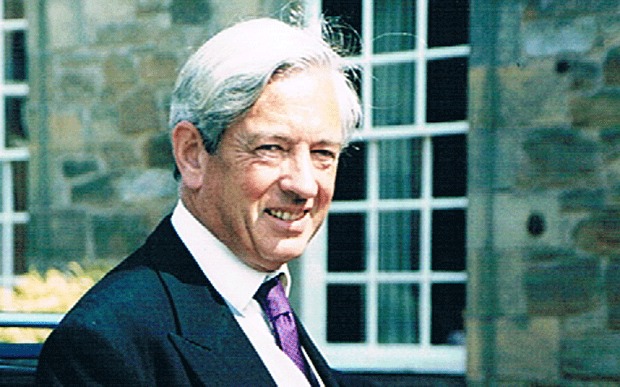
There can be few people in eurosceptic circles who did not know or had not seen Ronald Stewart-Brown at various meetings. A tall man with a forward leaning loping walk he had a ready smile, usually accompanied with a nod for all those many people he actually knew and any amount of time to discuss matters to do with the EU and, particularly, trade and what Britain's future might be if we come out.
One of my early meetings with Ronald was when I was working at the European Foundation. We had met and chatted before and one day he suggested lunch, mainly to discuss what his role might be in the eurosceptic fight. I don't think we came to any conclusion at the time but we resumed discussions in person and over the telephone on a number of occasions. Eventually, Ronald did find the right niche for himself: he set up the Trade Policy Research Centre and concentrated through research, published papers and discussions on building up a credible policy of an alternative trading network to EU membership. Inevitably, his ideas brought him into conflict with other people whose own ideas were just as strongly held if not always based on quite as much research. Ronald argued his case courteously but vehemently: his manners remained excellent but he would not be shifted from what he considered to be the right analysis. At the same time he was ready to listen to other people's opinions and there were times when I was embarrassed by his insistence on wanting to know what I thought on certain subjects.
At our last meeting we chatted as always and I expressed a certain amount of boredom with the whole subject of the EU. Having been involved in the debates for so long I did not think I could work up any enthusiasm now, though the situation was becoming critical. Ronald's response was characteristically complimentary and robust. First of all, he did not think that this was the time to give up or succumb to ennui. Of course, he added with a smile, you were so far ahead of us all those years ago, most of us are only just catching up. He intended to go on working and fighting as long as it was necessary and urged me to do the same. Alas, his time was considerably shorter than I realized.
We shall all miss his incisive and knowledgeable contribution to the coming debates.
Wednesday, July 15, 2015
The world seems to have gone mad
That title is the sort of hyperbole that usually makes me snort with disgust but, for once, I can see no other way of describing what is happening in the political and media world. People come up with the most ridiculous comments. Unfortunately, yes I do mean the reactions to what is going on in Greece, though I really had not intended to write about it again so soon.
The number of people who seem to have discovered all of a sudden that "the EU has a democracy problem" is quite spectacular. Apparently, all those discussions about the EU's "democracy deficit" have passed them by; apparently they did not notice what happened when countries voted in a referendum against implementing certain treaties and were made to vote again (with Greece always a reliable cheer-leader for the EU pack and against any change or reform); apparently they have no idea at all how the EU is governed - not through politics but management.
Well, I have news for all these people: the EU has no democracy problem; it was never intended to be a democracy (that is assuming the people in question can actually define democracy). Furthermore, democracy is of little use when you are seriously in debt and are relying on somebody else to fund your lifestyle. Back in the days I had to deal with bailiffs because of money I owed to the local council or the water board, I routinely consulted my household of fluctuating number of humans and cats and each time we voted unanimously against the proposals the bailiffs made about the payment of debts. Sadly, each time our democratic decision was overruled and pay it all we had to.
Then we come to the lunacy of #itsacoup, which people can read on Twitter even if they are not signed up for that particular form of social media themselves. I can only assume that it was started by someone who has no idea what a coup means and has no idea how the EU works (see above). It is, however, rather depressing when one gets a leading eurosceptic like Daniel Hannan coming up with rubbish of that kind.
I managed to miss his article in the Daily Mail on July 6 in which he congratulated the brave Greek people on standing up to the EU bullies and voting no to the proposed bail-out conditions (very similar to the ones they are about to accept). Ha-ha, he said, the Greeks are being threatened with all sorts of nasty things, like not having salaries, pensions and other expenses paid but they said boo to that and if they can do it, so can we. There is a difference between threats of that kind being made by the people who are doing the paying and those who are not. If Mr Hannan really proposes to compare Britain to Greece during the Brexit referendum campaign, we really are doomed: the reaction to that argument will be a colossal support for the staying in side.
He has now produced a film on YouTube in which he pretends to be a broadcaster during the Second World War or the Cold War and tells everyone that yes, this was a coup. As someone who actually was involved in Cold War broadcasting I find this pretentiousness ridiculous but that is what YouTube is for (as well as watching old episodes of The Avengers and listening to various adventures of Paul Temple, which is my preference). No, I really do not think so and, curiously enough, there are people actually in Greece (oh my!) who agree.
Take this article by Andreas Souvaliotis, a Social Entrepreneur (I think I know what that is) who says that au contraire, Greece: Here Is Why #ThisIsNotACoup.
Mr Souvaliotis advocates "tough love" and adds this extremely fine sentence that needs to be quoted to a good many people:
I am also looking at some eurosceptics, led by Mr Hannan and his many acolytes. Mind you, none of these people are quite as hilariously funny as the egregious Owen Jones who has suddenly decided that if the wonderful, extreme left wing government in Greece who just want to get lots of money from everybody else and never pay any of it back is bullied by the nasty EU and even nastier Germany then it is time for us to get out. The Left, he says, must reclaim the eurosceptic cause. All we need is that born-too-late student agitprop purveyor from the SNP, Mhairie Black to decide that the EU is not such a good idea after all. We can but hope that the likes of Owen Jones will swing back to being an idiot on the europhiliac side not an idiot on our side. Still, I am more than a little amused by the unholy alliance of Daniel Hannan and Owen Jones. Way to go, lads.
The number of people who seem to have discovered all of a sudden that "the EU has a democracy problem" is quite spectacular. Apparently, all those discussions about the EU's "democracy deficit" have passed them by; apparently they did not notice what happened when countries voted in a referendum against implementing certain treaties and were made to vote again (with Greece always a reliable cheer-leader for the EU pack and against any change or reform); apparently they have no idea at all how the EU is governed - not through politics but management.
Well, I have news for all these people: the EU has no democracy problem; it was never intended to be a democracy (that is assuming the people in question can actually define democracy). Furthermore, democracy is of little use when you are seriously in debt and are relying on somebody else to fund your lifestyle. Back in the days I had to deal with bailiffs because of money I owed to the local council or the water board, I routinely consulted my household of fluctuating number of humans and cats and each time we voted unanimously against the proposals the bailiffs made about the payment of debts. Sadly, each time our democratic decision was overruled and pay it all we had to.
Then we come to the lunacy of #itsacoup, which people can read on Twitter even if they are not signed up for that particular form of social media themselves. I can only assume that it was started by someone who has no idea what a coup means and has no idea how the EU works (see above). It is, however, rather depressing when one gets a leading eurosceptic like Daniel Hannan coming up with rubbish of that kind.
I managed to miss his article in the Daily Mail on July 6 in which he congratulated the brave Greek people on standing up to the EU bullies and voting no to the proposed bail-out conditions (very similar to the ones they are about to accept). Ha-ha, he said, the Greeks are being threatened with all sorts of nasty things, like not having salaries, pensions and other expenses paid but they said boo to that and if they can do it, so can we. There is a difference between threats of that kind being made by the people who are doing the paying and those who are not. If Mr Hannan really proposes to compare Britain to Greece during the Brexit referendum campaign, we really are doomed: the reaction to that argument will be a colossal support for the staying in side.
He has now produced a film on YouTube in which he pretends to be a broadcaster during the Second World War or the Cold War and tells everyone that yes, this was a coup. As someone who actually was involved in Cold War broadcasting I find this pretentiousness ridiculous but that is what YouTube is for (as well as watching old episodes of The Avengers and listening to various adventures of Paul Temple, which is my preference). No, I really do not think so and, curiously enough, there are people actually in Greece (oh my!) who agree.
Take this article by Andreas Souvaliotis, a Social Entrepreneur (I think I know what that is) who says that au contraire, Greece: Here Is Why #ThisIsNotACoup.
That tiny little daily violation of each other's rights is perfectly symbolic of the prevailing national culture in Greece: My freedom does not end where yours begins; it extends indefinitely, unless I'm caught or stopped. It is considered perfectly normal to jump ahead of you at the traffic lights, to smoke where I'm not supposed to smoke, to cheat on my taxes, to cook the nation's books in order to qualify for a currency union, to renege on every single election promise. Those who insist on respecting the rules are considered a little less smart, a little less "Greek" -- and they're often told they are the losers.Mr Souvaliotis exaggerates the extent to which the eurozone is rules-driven and respect-based, let alone tight economic community but he is spot on about the Greek attitude to it. I have no particular objections to a completely libertarian attitude to life, which is what the Greeks might say they have but I do feel that it is not compatible with an enormous government sector, high pay and pensions and demands that someone else, preferably other countries fund all that. That is all.
That's exactly the country that became financially insolvent recently. My beautiful birth country continues to be the Eurozone's most adolescent, rebellious, blindly self-defeating society. Greece didn't get into all this trouble because its European partners took advantage of it; it went bankrupt because, after more than a generation as a member of a rules-driven, respect-based tight economic community, it never figured out how to play fair, how to fit in and how to build real value. It enjoyed the spoils of membership without ever trying to live up to its end of the bargain; it cheated, squandered, abused, begged for more... and the cycle continued until the financial crisis suddenly brought the entire country to the brink of bankruptcy. And even then, on the strength of charm and an endless stream of fake reform promises over the past half-dozen years, the money kept flowing in from its badly tricked Euro partners in the form of bailouts. And nobody was even humiliated or angry about that. Until now, of course.
Mr Souvaliotis advocates "tough love" and adds this extremely fine sentence that needs to be quoted to a good many people:
Mercy on the Greek state, as a lot of bleeding hearts and newly minted euro-experts have been advocating these past few days, would have only fed a bad culture and perpetuated the problem.As someone said on another forum: I am looking at you, BBC journalists. Well, yes, the BBC hacks are suddenly dissatisfied with the way the EU has been behaving towards gallant little Greece (unlike the way it had behaved towards gallant little Denmark or Ireland). Again, I can only wonder what their attitude would have been if there had been a right-wing government in that country.
I am also looking at some eurosceptics, led by Mr Hannan and his many acolytes. Mind you, none of these people are quite as hilariously funny as the egregious Owen Jones who has suddenly decided that if the wonderful, extreme left wing government in Greece who just want to get lots of money from everybody else and never pay any of it back is bullied by the nasty EU and even nastier Germany then it is time for us to get out. The Left, he says, must reclaim the eurosceptic cause. All we need is that born-too-late student agitprop purveyor from the SNP, Mhairie Black to decide that the EU is not such a good idea after all. We can but hope that the likes of Owen Jones will swing back to being an idiot on the europhiliac side not an idiot on our side. Still, I am more than a little amused by the unholy alliance of Daniel Hannan and Owen Jones. Way to go, lads.
Tuesday, July 14, 2015
No it is not over yet, not by a long chalk
On another forum someone pointed out that it must be at lest 2,500 years since Iran (a.k.a. Persia) and Greece dominated the headlines to the extent they have been doing for the last week or so. That is true with some exceptions: there was the time six months ago, and a year ago, and two years ago and so on. Nor have the two stories gone away. President Obama may be lauding the nuclear agreement and pretending that it has nothing to do with Congress (memo to the Prez: read that Constitution at last) but Congress does not think so and there are a good many unhappy people in the region, starting with Israel and continuing with most Arab states. So that one will run and run.
What of Greece? Did the runner from Brussels bring the good news as the one from Marathon had done? Not exactly. On the one hand there will be a third bail-out (anyone who is surprised by that has not been paying attention) but on the other hand the terms imposed on Greece are about the same if not worse than the ones they voted against in that referendum. And this time the Prime Minister has accepted them because he had no alternative.
To his and the Greek population's surprise it emerged that they were not holding the whip hand. Far from it: they voted against the austerity plan on the assumption that they will still be getting a bail-out and emergency funds to keep going in the style they seem to have accustomed themselves to. (Well, maybe not quite in that style as anyone who has a transferable skill is leaving or planning to leave the country.) The trouble with that reasoning as I have pointed out before, is that you cannot vote democratically or otherwise about something you cannot control. In other words, for the Greeks to vote in favour of getting more money from other EU member states was pointless - it is the other states that were going to decide on that and they, too, have people and electorates.
The sad truth is (well, sad from the Greek point of view) that it is they who are desperate to stay in the eurozone while the other members do not seem to care all that much. My suspicion is that most of the big banks and government departments in German, France and the other countries have been making various plans for a Grexit and will be more or less prepared. Not fully, of course, as one can never be fully prepared for something like that, but more or less. Whether the Greek government has made any plans remains a moot point. For the time being they are hanging on in there and I do mean the eurozone.
Will the Greek government survive in Greece? That remains to be seen but I predict that they will. No other real alternative is being presented. Tsipras is facing a rebellion in Syriza but is being supported by the opposition parties. A good deal of hysterical nonsense is being spouted:
Meanwhile, the agreement might (though probably won't) be scuppered by the German Bundestag who seem to think that democracy and voting is not just for the Greeks.
Brendan O'Neill has written an excellent piece on the born again left-wing eurosceptics who are in agony because the poor Greeks and their left-wing government is being so badly treated.
This is what I said on the anniversary of the bringing down of the Berlin Wall:
Many of the people who have been raising the wicked Germans oppressing the Greeks cry found themselves spluttering with fury when it became apparent that Britain would have to contribute £1 billion to the short-term funding (there really is no money there). The UK is, therefore, opposing any immediate solution that would involve British taxpayer's money. As I am one of them I have no objections to that stance (though it ignores certain other funds) but I am a little perplexed by people's attitude of being generous at Germany's and other eurozone countries' expense.
Just to make things worse, the IMF tells us that they are actually worse than we think. Much worse.
Is there a solution to any of this? I am not sure anybody knows what it might be. Certainly leaving the eurozone might be a starting point for Greece but it will still have the debts and an dysfunctional economy. Leaving without some idea of what to do next will solve nothing.
As I said, it is not over, not by a long chalk.
What of Greece? Did the runner from Brussels bring the good news as the one from Marathon had done? Not exactly. On the one hand there will be a third bail-out (anyone who is surprised by that has not been paying attention) but on the other hand the terms imposed on Greece are about the same if not worse than the ones they voted against in that referendum. And this time the Prime Minister has accepted them because he had no alternative.
To his and the Greek population's surprise it emerged that they were not holding the whip hand. Far from it: they voted against the austerity plan on the assumption that they will still be getting a bail-out and emergency funds to keep going in the style they seem to have accustomed themselves to. (Well, maybe not quite in that style as anyone who has a transferable skill is leaving or planning to leave the country.) The trouble with that reasoning as I have pointed out before, is that you cannot vote democratically or otherwise about something you cannot control. In other words, for the Greeks to vote in favour of getting more money from other EU member states was pointless - it is the other states that were going to decide on that and they, too, have people and electorates.
The sad truth is (well, sad from the Greek point of view) that it is they who are desperate to stay in the eurozone while the other members do not seem to care all that much. My suspicion is that most of the big banks and government departments in German, France and the other countries have been making various plans for a Grexit and will be more or less prepared. Not fully, of course, as one can never be fully prepared for something like that, but more or less. Whether the Greek government has made any plans remains a moot point. For the time being they are hanging on in there and I do mean the eurozone.
Will the Greek government survive in Greece? That remains to be seen but I predict that they will. No other real alternative is being presented. Tsipras is facing a rebellion in Syriza but is being supported by the opposition parties. A good deal of hysterical nonsense is being spouted:
Greek Energy Minister and Left Platform leader Panagiotis Lafazanis said yesterday, “Our so-called partners led by the German establishment, behaved towards our country as being their colony and they are nothing more than brutal blackmailers and financial assassins.”Clearly, even elementary knowledge of economic facts is not a requirement in the Greek government. As for political understanding, don't even think of it. Greece has been a colony of the EEC/EC/EU ever since it joined and its own political establishment, backed by its electorate has done nothing to change that situation.
Meanwhile, the agreement might (though probably won't) be scuppered by the German Bundestag who seem to think that democracy and voting is not just for the Greeks.
“The package is neither credible nor viable,” centre-right MP Klaus-Peter Willsch told Tagesspiegel.Looking at it from another point of view, I cannot help wondering whether the sort of weeping and wailing and gnashing of teeth that is to be seen on the left of our own political spectrum, especially among the europhiliacs, has anything to do with the fact that the Greek government that is allegedly being "humiliated" is of the fairly extreme left-wing variety. Would we see the same if it had been of the right?
MPs from the larger of the two centre-right parties, the Christian Democratic Union (CDU), Wolfgang Bosbach and Willsch announced their intentions to vote “no” on Friday, just as they have in previous votes regarding Greek aid.
Still, most of the Bundestag’s centre-right, Social Democrats and Greens are expected to vote “yes” on a mandate the German government needs for negotiations on a third bailout for Greece. The Left Party is expected to reject the plan. In a second vote, the Bundestag would later have to agree to the new assistance programme.
The agreement established on Monday (13 July) morning in Brussels is a further attempt to “patch-up cracks in the system with a lot of money”, Willsch said. Among other things, he criticised the scope of the planned €50 billion trust fund. This was already recorded as a privatisation target in the first bailout package, but not even 10% of it was actually achieved.
Hans-Peter Friedrich, the deputy chair of the centre-right group in the Bundestag, expressed his doubts over reform pledges from Greece’s left-wing government.
“I do not believe one word the Greek communists say anymore,” Friedrich told Bild.
Brendan O'Neill has written an excellent piece on the born again left-wing eurosceptics who are in agony because the poor Greeks and their left-wing government is being so badly treated.
But I’m not feeling very welcoming to these latter-day doubters, currently live-tweeting their Euro-existential angst and clogging their newspaper columns with tortured questions about whether the EU really is a ‘great achievement of enlightened internationalism’. (Answer: no, you donuts.) For two reasons.As a matter of fact I, too, am fed up with the stupid cry of "Nazi Germany marches again" and "Merkel is just like Hitler". No, this Germany is not Nazi, Merkel is nothing like Hitler, the country is a democracy and has to pay attention to its own people and, in any case, the other putative donors (there is no point in pretending that these are loans) are not too happy with Greece either.
Firstly because it’s just too late. Where the hell were you guys in 2001, when the Irish people rejected the Nice Treaty and were subjected to a tirade of abuse from EU officials before being made to vote again? Where were you in 2005, when the Dutch and French peoples were libelled by EU officials as racists and xenophobes and ‘the generally pissed off’ for having the temerity to reject the EU Constitution? Where were you in 2006 and 2007 when some of eastern Europe’s elected leaders were told by Brussels to tone down their political rhetoric or face being found in contravention of EU obligations? Greece is far from the first European nation to have its democratic impulse nulled by Brussels bureaucrats.
I’ll tell you where you were back then: you were on the side of the Eurocrats sneering at the pesky masses. You treated criticism of Europe as a kind of mental malaise: Europhobia. And you let it be known that all good people, like you, back the EU, whereas only bad people — racists, nationalists, fat blokes with the St George’s Cross tattooed on their arses — oppose it. You formed a chattering-class ring of steel around the EU, deflecting all critical jabs and barbs as the unhinged mutterings of the generally pissed-off. So, yeah, your Damascene conversion to the cause of Euro-questioning is a tad irritating, to be frank.
The second reason I’m not rolling out the red carpet for these people coming around to a way of thinking they once branded a phobia is because they’re doing it wrong. They aren’t genuinely opposed to the EU; they’re just really angry with Germany. In fact, much of this oh-so-late Euroscepticism, especially from the left, is really anti-German sentiment in disguise. It’s the return of the British disease: a hives-like allergy to all things German and a rash fear that this nation is once again plotting to subject all of Europe to its black, unforgiving boot.
This is what I said on the anniversary of the bringing down of the Berlin Wall:
And now, my fellow eurosceptics, let us do a little bit of maths. The Federal Republic of Germany, popularly known as West Germany, became a constitutional democracy in May 1949, that is sixty-five years ago. That democracy was strong enough to take in twenty-five years ago a section of Germany that had been a Communist country for forty years. Since then united Germany has had many problems (haven't we all?), both economic and political but it has remained a democracy and there seems not possibility of it being anything else. As against that, the Nazi regime lasted for twelve years. That's twelve years against sixty-five and twenty-five. Could we now stop talking about Germany as being always and for ever potentially Nazi?Obviously no, we cannot get out of that stupid rut for if we did we might have to think a little more seriously about the present and the future.
Many of the people who have been raising the wicked Germans oppressing the Greeks cry found themselves spluttering with fury when it became apparent that Britain would have to contribute £1 billion to the short-term funding (there really is no money there). The UK is, therefore, opposing any immediate solution that would involve British taxpayer's money. As I am one of them I have no objections to that stance (though it ignores certain other funds) but I am a little perplexed by people's attitude of being generous at Germany's and other eurozone countries' expense.
A diplomatic source said Monday that Poland too would oppose the use of EFSM to provide emergency cash for Greece.Well, that should solve it. Would IOUs be acceptable to Greek pride about which we have been hearing so much recently?
The source added that even some eurozone countries are wary of the bridge-funding idea, saying Greece has enough money to meet its short-term needs.
Other solutions to provide the bridge-funding have been aired, for instance, the use of SMP profits - the profits made on Greek bonds by the ECB and eurozone national banks - or bilateral loans to Greece from countries including France and Italy.
"I foresee those negotiations being very difficult because I don't see many countries having a mandate to give money without any conditions", Finnish finance minister Alex Stubb said Monday.
Arriving at the Ecofin meeting on Tuesday, Luxembourg finance minister Pierre Gramegna said there is "no ready product on the table yet" and that ministers would listen to experts from the euro working group who have been tasked to work on the issue.
According to Germany's Handelsblatt newspaper, German finance minister Wolfgang Schaeuble proposed at Monday's Eurogroup that Greece issues IOUs to repay its debt to the IMF and ECB.
Just to make things worse, the IMF tells us that they are actually worse than we think. Much worse.
A secret International Monetary Fund study showed Greece needs far more debt relief than European governments have been willing to contemplate so far, as Germany heaped pressure on Athens on Tuesday to reform and win back its partners' trust.That is a complex, technical way of saying that Greece is going to be kept going by the rest of us, that debts will not be repaid, that no reforms will be sufficient to solve the problems and .... that we shall all have to keep them going. Even colonies are stronger economically than that.
The IMF's stark warning on Athens' debt was leaked as Greek Prime Minister Alexis Tsipras struggled to persuade deeply unhappy leftist lawmakers to vote for a package of austerity measures and liberal economic reforms to secure a new bailout.
The study, seen by Reuters, said European countries would have to give Greece a 30-year grace period on servicing all its European debt, including new loans, and a dramatic maturity extension. Or else they must make annual transfers to the Greek budget or accept "deep upfront haircuts" on existing loans.
Is there a solution to any of this? I am not sure anybody knows what it might be. Certainly leaving the eurozone might be a starting point for Greece but it will still have the debts and an dysfunctional economy. Leaving without some idea of what to do next will solve nothing.
As I said, it is not over, not by a long chalk.
Thursday, May 28, 2015
A rant about eurosceptics
Don't think I've had one of these for a long time but it is time I did. This is not about euroscepticism in general but about eurosceptic organizations. As it happens, another one of them had a conference this morning about Brexit. It was under Chatham House rule (why?) so I could not tweet about it. The rule says that I can use the material but no reference to the details of the event or the speakers. Well, I shall not refer to the details or the speakers and using the material will not be of much use since everything that was spoken has been spoken many times, mostly in the same words and often by the same people in the years I have been attending such meetings and conferences. (For understandable reasons I do not do as much of it as I used to. There is only so often one can listen to the same words, knowing that they lead to precious little.)
Suffice it to say that as seems to have become the norm for these meetings, discussions and conferences, the panel was entirely male though there were six (out of about thirty) women in the audience. Since one member of the panel had rather pompously and condescendingly informed us that we needed to win the women's vote, which was not going to be easy as women preferred the status quo (though how he knew was a mystery) someone did ask how they intended to do this without, apparently, bothering to have any women speakers.
The chairman, no names no pack drill, said even more condescendingly that the questioner, as a woman, should be able to answer that question better. Upon which I suggested that perhaps we can make tea and stuff envelopes. I am not convinced the audience quite grasped the sarcasm behind the comment but I did insist on discussing the problem for at least a couple more minutes. Precisely, why are there no women speakers? Are there no women who understand the issues of Brexit and have something to say on the subject? What, none at all? Answer came there none.
Quite separately, I have been working on an article about a leading Conservative suffragist, Primrose Dame and political activist, Lady Knightley (1842 - 1913) and, therefore, reading about women, mostly on the conservative but some on the liberal side, fighting for various political and other rights. It is not exactly surprising that I should find it depressing that similar fights have to go on more than a hundred years later. Nor am I too impressed when told that there are no women speakers because these are chosen on merit and not as a result of positive discrimination. No women of merit at all? Might there be something wrong in the eurosceptic movement.
As it happens I do not think that putting a token female at the head of the whatever NO campaign we might cobble together will do. But then, I do not suppose anyone will listen to a female voice, anyway.
Incidentally, there was also an issue about eurosceptics sniping at each other and what a bad idea that was. The recent media coverage of UKIP was, according to one speaker, very unfortunate. Well, of course, what was really unfortunate was UKIP's idiotic behaviour but, it seems, that not sniping is being interpreted as never disagreeing or criticizing because up with this we must not put. It is good to know that Soviet rules of political behaviour are being imposed on us all even before we have started.
Rant over, you will be glad to know. Normal service will resume tomorrow.
Suffice it to say that as seems to have become the norm for these meetings, discussions and conferences, the panel was entirely male though there were six (out of about thirty) women in the audience. Since one member of the panel had rather pompously and condescendingly informed us that we needed to win the women's vote, which was not going to be easy as women preferred the status quo (though how he knew was a mystery) someone did ask how they intended to do this without, apparently, bothering to have any women speakers.
The chairman, no names no pack drill, said even more condescendingly that the questioner, as a woman, should be able to answer that question better. Upon which I suggested that perhaps we can make tea and stuff envelopes. I am not convinced the audience quite grasped the sarcasm behind the comment but I did insist on discussing the problem for at least a couple more minutes. Precisely, why are there no women speakers? Are there no women who understand the issues of Brexit and have something to say on the subject? What, none at all? Answer came there none.
Quite separately, I have been working on an article about a leading Conservative suffragist, Primrose Dame and political activist, Lady Knightley (1842 - 1913) and, therefore, reading about women, mostly on the conservative but some on the liberal side, fighting for various political and other rights. It is not exactly surprising that I should find it depressing that similar fights have to go on more than a hundred years later. Nor am I too impressed when told that there are no women speakers because these are chosen on merit and not as a result of positive discrimination. No women of merit at all? Might there be something wrong in the eurosceptic movement.
As it happens I do not think that putting a token female at the head of the whatever NO campaign we might cobble together will do. But then, I do not suppose anyone will listen to a female voice, anyway.
Incidentally, there was also an issue about eurosceptics sniping at each other and what a bad idea that was. The recent media coverage of UKIP was, according to one speaker, very unfortunate. Well, of course, what was really unfortunate was UKIP's idiotic behaviour but, it seems, that not sniping is being interpreted as never disagreeing or criticizing because up with this we must not put. It is good to know that Soviet rules of political behaviour are being imposed on us all even before we have started.
Rant over, you will be glad to know. Normal service will resume tomorrow.
Thursday, July 31, 2014
Two steps forward, one step back
Readers will have noticed from the title that I am a little more optimistic than that "great thinker" and vicious political squabbler, V. I. Lenin was in 1904 when he dipped his pen into vitriol and wrote his famous attack on his colleagues in the Russian Social-Democratic Party, One Step Forward, Two Steps Back.
Needless to say, Lenin was never so vehement in his attacks on the Tsarist government or the right-wing parties, once these developed in Russia, as he was when fighting for power and supremacy in his own party.
This is not, however, a posting about Lenin or the Bolsheviks, so everyone can relax, assuming they have got this far.
My sorrowful and, to some extent, angry complaint is about our own so-called Eurosceptic movement, which is, despite many things, both in British and in European politics, being in our favour, in a parlous state.
For once, I am going to keep off the subject of UKIP (mostly) and its spectacular ability to set the debate back by a couple of decades just as we were beginning to make headway with more people than ever before saying that they did not think leaving the EU would be a catastrophe for any part of the country or its economy. At which point, along came UKIP and produced its latest version of "Euroscepticism" as a protectionist, statist and, yes, I am sorry to say xenophobic idea. (I hope nobody bothers to tell me that UKIP's policy is controlled immigration as they have neither explained what they mean by that nor bothered to voice it in their election pamphlets in May.)
After that extensive throat clearing let me get on to the main theme of this posting, which was brought to my mind by a conversation I had with an intelligent, politically astute and well-meaning friend who entered the Eurosceptic political scene considerably later than I did for reasons of age. Said friend explained to me that she (doesn't narrow it very much) had not yet reached the position of being a withdrawalist from the EU despite having worked with people who are for the last few years. First, she wanted to explore all the possibilities of reform and other long-term plans.
I did not groan but pointed out soberly that I have learnt very clearly in the years I have been involved that the idea of an adequate reform of the EU in the direction we (and, supposedly, the Conservative Party) would like to see it is moonshine while long-term planning is pointless as long as we remain part of the European project.
Ah yes, came the reply but we have to arrive at that conclusion in our own way not simply rely on what people tell us. My response continued to be sober and firm: the country cannot afford to wait while each new generation goes through the process of learning from its mistakes of expecting some kind of a reform and being disappointed over and over again.
The conversation moved on to other subjects but it stayed with me. That is really the problem: for some reason the notion that people should learn from previous mistakes and build on previous achievements is not popular with Eurosceptics who, like particularly inept teachers in primary schools (and I have seen a few), assume that everyone must re-invent the wheel over and over again. Then they (and the parents of the children unlucky enough to be in those schools) wonder why there is no progress.
Actually, I am wrong. The teachers do not care about lack of progress but, more importantly from our point of view, the constantly new generation of Eurosceptics who keep re-inventing the wheel and insist that it is right and proper that they should do so, believe that each time there is progress being made. Unfortunately that progress is only to the same point we had reached before or just a little bit beyond it instead of the sort of large steps forward that we ought to be making by this time and in this particular atmosphere.
Given that the new generation of wheel re-inventers are those who populate the various Eurosceptic organizations and, above all, the well funded campaigns for a referendum, which, let me repeat for the umpteenth time, we shall lose unless we move forward in our arguments a little faster, my unhappy summary stands: two steps forward, one step back. That's true for the time being but it may all get worse.
Needless to say, Lenin was never so vehement in his attacks on the Tsarist government or the right-wing parties, once these developed in Russia, as he was when fighting for power and supremacy in his own party.
This is not, however, a posting about Lenin or the Bolsheviks, so everyone can relax, assuming they have got this far.
My sorrowful and, to some extent, angry complaint is about our own so-called Eurosceptic movement, which is, despite many things, both in British and in European politics, being in our favour, in a parlous state.
For once, I am going to keep off the subject of UKIP (mostly) and its spectacular ability to set the debate back by a couple of decades just as we were beginning to make headway with more people than ever before saying that they did not think leaving the EU would be a catastrophe for any part of the country or its economy. At which point, along came UKIP and produced its latest version of "Euroscepticism" as a protectionist, statist and, yes, I am sorry to say xenophobic idea. (I hope nobody bothers to tell me that UKIP's policy is controlled immigration as they have neither explained what they mean by that nor bothered to voice it in their election pamphlets in May.)
After that extensive throat clearing let me get on to the main theme of this posting, which was brought to my mind by a conversation I had with an intelligent, politically astute and well-meaning friend who entered the Eurosceptic political scene considerably later than I did for reasons of age. Said friend explained to me that she (doesn't narrow it very much) had not yet reached the position of being a withdrawalist from the EU despite having worked with people who are for the last few years. First, she wanted to explore all the possibilities of reform and other long-term plans.
I did not groan but pointed out soberly that I have learnt very clearly in the years I have been involved that the idea of an adequate reform of the EU in the direction we (and, supposedly, the Conservative Party) would like to see it is moonshine while long-term planning is pointless as long as we remain part of the European project.
Ah yes, came the reply but we have to arrive at that conclusion in our own way not simply rely on what people tell us. My response continued to be sober and firm: the country cannot afford to wait while each new generation goes through the process of learning from its mistakes of expecting some kind of a reform and being disappointed over and over again.
The conversation moved on to other subjects but it stayed with me. That is really the problem: for some reason the notion that people should learn from previous mistakes and build on previous achievements is not popular with Eurosceptics who, like particularly inept teachers in primary schools (and I have seen a few), assume that everyone must re-invent the wheel over and over again. Then they (and the parents of the children unlucky enough to be in those schools) wonder why there is no progress.
Actually, I am wrong. The teachers do not care about lack of progress but, more importantly from our point of view, the constantly new generation of Eurosceptics who keep re-inventing the wheel and insist that it is right and proper that they should do so, believe that each time there is progress being made. Unfortunately that progress is only to the same point we had reached before or just a little bit beyond it instead of the sort of large steps forward that we ought to be making by this time and in this particular atmosphere.
Given that the new generation of wheel re-inventers are those who populate the various Eurosceptic organizations and, above all, the well funded campaigns for a referendum, which, let me repeat for the umpteenth time, we shall lose unless we move forward in our arguments a little faster, my unhappy summary stands: two steps forward, one step back. That's true for the time being but it may all get worse.
Wednesday, June 25, 2014
Mostly I despair
Mostly but not always. Mostly I despair of the eurosceptic movement and all who sail in it, particularly when questions outside their tiny little world come up. Or, in other words, I do not think the overwhelming proportion of eurosceptics can or want to understand what is going on in various parts of the world. It is all too difficult and, therefore, they relate everything to what they think they know (but actually rarely do as nothing happens in isolation). So, just as the left has to relate everything to the evil American empire so a large proportion of eurosceptics has to relate everything to the EU, whether that benighted organization is of any relevance or not. As a consequence, the insanely anti-American left and right (a smidgeon more insane than the left), a number of Conservative politicians who have learnt nothing from the second half of the twentieth century and a very large proportion of self-accredited eurosceptics have been cheering for President Putin and his jolly Chekists as they invaded Ukraine, took away a part of it, Crimea and sent in more troops in funny clothes to link up with local separatists in order to destabilize parts of eastern Ukraine.
You'd think that people who are in favour of national sovereignty, especially based on an agreement that was created when a forcibly united multi-national state based on ideology fell apart, would actually support one of them when it is under attack. Well, you'd be wrong. A curious misreading of what happened in Ukraine has led a number of eurosceptics helter-skelter into the ranks of the Putinistas who appear to be in favour of the recreation of a new Soviet Union in the shape of the Eurasian Union. (Fortunately for many of us, not to mention the people of the former Soviet Union, Russia as led and destroyed by Vlad and his mates is not in a fit state to impose its rule on the others though it is quite capable of the aforementioned territorial invasion and destabilization.)
Why am I not in total despair? Well, it always cheers me when I read an article that clearly understand the issues and does not mince its language. Such an article is in July/August's issue of Standpoint and it is by my good friend (full disclosure) Michael Mosbacher.
He lambasts the insane and Stalinist left and insane right in equal measure but what is particularly painful from my point of view is his well-argued and fully justified attack on the Bruges Group that, in my absence from its counsels, seems to have gone slightly mad.
Mr Mosbacher explanation of what happened and what role the EU played at the very beginning of the crisis (after which it became irrelevant as I have mentioned a few times before) is accurate:
There is also a well deserved attack on the Conservatives and their allies in the Council of Europe and its preposterous Parliamentary Assembly. Read the whole piece. The title? Putin Has His Useful Idiots on the Left and the Right.
You'd think that people who are in favour of national sovereignty, especially based on an agreement that was created when a forcibly united multi-national state based on ideology fell apart, would actually support one of them when it is under attack. Well, you'd be wrong. A curious misreading of what happened in Ukraine has led a number of eurosceptics helter-skelter into the ranks of the Putinistas who appear to be in favour of the recreation of a new Soviet Union in the shape of the Eurasian Union. (Fortunately for many of us, not to mention the people of the former Soviet Union, Russia as led and destroyed by Vlad and his mates is not in a fit state to impose its rule on the others though it is quite capable of the aforementioned territorial invasion and destabilization.)
Why am I not in total despair? Well, it always cheers me when I read an article that clearly understand the issues and does not mince its language. Such an article is in July/August's issue of Standpoint and it is by my good friend (full disclosure) Michael Mosbacher.
He lambasts the insane and Stalinist left and insane right in equal measure but what is particularly painful from my point of view is his well-argued and fully justified attack on the Bruges Group that, in my absence from its counsels, seems to have gone slightly mad.
Whether intentionally or not, the Eurosceptic Bruges Group has become an apologist for Putin. The group was established in 1989 to support the views expounded by Margaret Thatcher in her Bruges speech of the previous year calling for an end to the federalist project and a more decentralised Europe. It has now produced Someone Had Blunder'd, a 30-minute film attacking UK and EU policy on Ukraine for provoking Russia, indeed for being the cause of the current crisis. It is fronted by Bruges Group director Robert Oulds and features Conservative MPs Peter Bone, Bernard Jenkin and John Redwood, twice a leadership candidate, as well as erstwhile party chairman Lord Tebbit. They are now exploring a follow-up film with Sir Bill Cash MP.To be honest none of the participants of the film are people to whom I would turn for elucidation of any question of foreign affairs, let alone those to do with the former Soviet Union. What the egregious John Redwood might have meant by his comment is anybody's guess as is Bernard Jenkin's invention of the mythical and meaningless Euro-neocons.
The argument of these critics is that, in the phrase of Bernard Jenkin, the Euro-neocons — surely as mythical a beast as any yet imagined — running the EU have pursued an aggressive policy of eastward expansion which has encroached on Russia's sphere of influence and thus made it feel threatened. In their view it is the EU's rather than Russia's expansionism which has provoked conflict. Jenkin argues that the EU has been "fomenting divisions in order to bring Ukraine into the European orbit". Redwood says: "It was EU action seeking to expand their empire to the West [sic] which first started the reaction of Russia."
Mr Mosbacher explanation of what happened and what role the EU played at the very beginning of the crisis (after which it became irrelevant as I have mentioned a few times before) is accurate:
It is true that the demonstrations against Yanukovych began last November when he announced that he would not be signing an Association Agreement with the EU but would instead throw in his lot with Putin's Eurasian Customs Union.Clearly, it is not high on the average eurosceptic's list of priorities either (that is, assuming, they know where Ukraine is, something I am doubtful of).
The critics are right that the Association Agreement is much more than a free-trade agreement. In Article Seven it commits Ukraine to "promote gradual convergence in the area of foreign and security policy". Article Ten of the agreement provides for "increasing the participation of Ukraine in EU-led civilian and military crisis management operations" and exploring the potential of military-technological cooperation.
The agreement may indeed undermine Ukrainian sovereignty, but surely is nothing compared to the Russian-dominated Eurasian Customs Union. While the latter may on paper be nothing more than a customs union does anyone seriously believe that it will remain as such? Has Putin's aggression in Ukraine not rather proven the point that Ukrainian sovereignty is not high on his list of priorities?
There is also a well deserved attack on the Conservatives and their allies in the Council of Europe and its preposterous Parliamentary Assembly. Read the whole piece. The title? Putin Has His Useful Idiots on the Left and the Right.
Monday, January 13, 2014
Open Europe speaks
I follow Pawel Swidlicki of Open Europe on Twitter because I like to know what that benighted organization, formerly of the perestroika europhile variety, now openly so, says. Often I get angry enough to reply to his maunderings but the conversation is never very satisfactory. Anyway, I found these two tweets from him today:
Agree we shouldn't leave EU but annoyed by how Clegg misrepresents many outers' argument who want UK to be more globally oriented not lessAnd two minutes later:
Of course no reason why UK can't be both in EU and more globally orientated but that's a separate argumentThis, dear readers, is the opinion of one of the researchers in an organization that claims to be knowledgeable about the EU and to be ... ahem .... eurosceptic. I rest my case.
Sunday, October 20, 2013
More on Brigadier Cowgill

Though my last posting was largely a dissection of the noble Lord Leach and his pretensions, so avidly backed by the Evening Standard, to being the leader of the more intellectual branch of the eurosceptic movement, it also referred briefly to the man who has been described as the unsung hero of it, Brigadier Anthony Cowgill MBE.
All of us who knew Tony Cowgill, his indefatigable work, his determined stubbornness to get the at the truth and to overcome the "gobbledegook" presented by the EU and its various supporters and, above all, his unfailing charm and courtesy miss him a great deal. The cause misses him.
His work on the EU started in 1992 when he had reached an age at which most people would consider retiring and taking things easy. Not Tony. He and his son Andrew laboured mightily to produce annotated versions of the various treaties, whether the government wanted us to read the text and understand it or not (mostly not). I am very proud to say that in the days when texts were not available on the internet but only in hard copy I was instrumental on several occasions in getting those pages to Tony and his son Andrew as soon as possible from the Parliamentary offices.
Discussing Tony Cowgill with a friend yesterday I was reminded of his role in creating a business organization that opposed Britain's entry into the euro. This is what said friend, a journalist (hint: he has a regular column in the Sunday Telegraph) wrote:
The Brigadier had been after the CBI for some time over its bogus polls trying to show that "business" was generally in favour of the EU, although when you looked at the small print the polls showed very serious and growing dissatisfaction with the workings of the single market, over-regulation etc. Then they trumpeted that the biggest yet poll was to be carried out by Bob Worcester and MORI with special reference to Britain joining the euro. Tony had one of his fatherly talks with Worcester and pointed out that it would do his professional standing no good if he gave his name and prestige to a much-publicised poll that would, on the CBI's track record, be presented as no more than a shameless propaganda exercise. Shortly afterwards, Worcester told Tony that he had withdrawn from his arrangement with the CBI (as was publicised by certain malicious journalists at the time, well one of them at least), and the much-vaunted poll was never carried out.And that, ladies and gentlemen, is how it all began. It is up to us to ensure that the Brigadier's name lives on and his achievements are not forgotten.
At the same time, Tony had ensured that his reporting on the CBI's chicanery with its polls was passed on to various key CBI members, including Stanley Kalms (now Lord Kalms)and also a regional branch which made a big stink about what head office was up to. The result of all this was that a number of concerned senior members, including Kalms and Leach set up Business for Sterling, which did play a significant part in showing that there was great unhappiness about the euro in big business circles but the groundwork had been laid by the great scare over Goldsmith's Referendum Party - which prodded all three main parties into pledging before the 1997 election that Britain should only be allowed to join if this was put to a referendum first.
Thursday, September 26, 2013
"Our Campaign and our Country owe him a debt of gratitude."

On Monday, however, I heard the sad news of another death of a man who was not as well known as Ken Minogue but who, in his own way, did a great deal for the cause of euroscepticism. When and, I am afraid, if British independence will be regained Sir Robin Williams (1928 - 2013), quondam chairman of the Anti-Common Market League and for many years, through good ones and bad, the Honorary Secretary of the Campaign for an Independent Britain will be remembered as one of the heroes of the fight. (Given that Sir Robin Williams was the Hon. Sec. of that organization from 1969 to 2008, I should have expected the CIB to have something about him on the website but I cannot find anything.)
The first time I met Sir Robin was in 1992 at the first CIB meeting I attended. I went as a guest from the Anti-Federalist League to tell them, just as I had told the Freedom Association that morning that we had published the Maastricht Treaty, which the government was holding back for reasons that it never managed to explain adequately. It was an illuminating day and I met a number of people whom I was to know well in the succeeding years. One of them was a slim gentleman of slightly military bearing who tended to bark questions and instructions. He was, as I learned then, the Secretary of the CIB and a man who tended to know all the members and what they were up to.
As I became more involved in the eurosceptic movement I started meeting Sir Robin and Wendy, his wife who would grin cheerfully at people her husband was haranguing, at various events and he began to ask me when I was going to join the CIB. Eventually, realizing that I had a rooted objection to joining any organization, he solved the problem by asking my daughter and me to lunch at their Highgate home. After the lunch we went for a walk and on returning he called me into his den, where the CIB's business was transacted and where its telephone stood, put an application form in front of me and stood over me while I filled it in and signed it. I tell the story with amusement to demonstrate Robin's determination to win as many members to his organization as he could, especially those who might then be put to work.
For to work I was put and became the CIB's press officer for some years. That was the heyday of many eurosceptic organizations, who suddenly found that their cause, which had languished for years, became once again important and well-known during and after the Maastricht debates.
Though I have seen them rarely in the last few years, I became friends with both Robin and Wendy, who gave talks at the Victoria and Albert Museum to which I went several times and from which I carried away a good deal of interesting knowledge that I can still recall after some years. No lecturer could ask for more.
It could be said that Sir Robin Williams sacrificed what must have been a promising political career to his beliefs and his opposition to Britain's entry into the Common Market. His father, the first Baronet, was a Conservative MP with an unusual background for that party. Sir Herbert Williams of Cilgeraint (1884 - 1954) received a degree in Science and Engineering at the University of Liverpool and in 1911 became secretary and manager of the Machine Tools Trade Association. He also served on Wimbledon Borough Council. From 1924 to 1929 he was Conservative MP for Reading and a member of the first Court of the University of Reading when it received its Royal Charter in 1926. This is not the career of a nostalgically minded Tory.
Sir Herbert became MP for Croydon South in a by-election in 1932 and remained that until the Labour landslide of 1945. Despite the fact that it was his close colleague, the Conservative MP for Croydon North who proposed the Beveridge Report in the House of Commons in 1944, Sir Herbert vehemently opposed it. I cannot help feeling that with that career, Robin's father would have been a supporter of Mrs Thatcher.
Interestingly, opposing government and party leadership policy did not, in those days, mean the end of your career. Sir Herbert may have lost his seat in 1945 but was re-elected in one of the reorganized Croydon seats in 1950, remaining there till his death in 1954, having been made a baronet (something his son was rightly proud of) in 1953.
There is also a curious irony to the story: Sir Herbert's daughter Rosemary married another Baronet, Sir Ian Mactaggart, a millionaire Glasgow property developer and well-known eurosceptic; their daughter and Robin Williams's niece is Fiona Mactaggart a Labour MP of extreme left-wing views and questionable veracity in statements.
Times have changed. Sir Robin Williams was set for a political career as well and as Chairman of the Bow Group in 1954 - 55 (Geoffrey Howe's predecessor) he would have become a Conservative MP at some point if it had not been for his unfortunate tendency to speak his mind, that being quite clearly a family trait. His vehement opposition to Britain's entry into the EEC meant that he had to abandon any ideas of standing for Parliament. Instead he continued at Lloyd's and devoted his political and organizational talents to the anti-EEC/EC/EU movement.
As mentioned above, he became Chairman of the Anti-Common Market League (now called Get Britain Out) when it was formed in 1969 and remained in that position till 1984. The League was a founding constituent member of the National Referendum Campaign, a cross-party organization formed to fight for a referendum and also against Britain's entry into the Common Market. Sir Robin also became the Secretary of the Campaign for an Independent Britain that grew out of that early movement and is a continuing umbrella organization for a number of eurosceptic groups of long standing. He remained that through lean years and fat ones, when the media ignored it and when it wanted to know all about it. One look at the constituent groups would indicate the difficulty any Secretary would have in keeping them all on board, all more or less at peace with each other and all supporting the umbrella organization. It is no wonder that Robin would occasionally lose his temper in committee meetings and AGMs though he usually recovered his equanimity fairly quickly.
Let me add that his support for my activities as Press Officer for the CIB and the Anti-Maastricht Alliance as well as the organizer of the Red Lion Talks (of which I really must write some time) was unstinted.
Age was beginning to tell on Robin in the last few years though he still turned up for many meetings of the Bruges Group and other events. He was there at the May AGM of the CIB but, not being a member any longer, I went to the afternoon conference, specifically to hear the Boss on the subject of Article 50 and its consequences. Robin had left. People who had been there for the AGM have told me that he was looking very frail. In a way, I am glad I did not see him though sorry that I missed that last possible occasion to exchange a few words.
As another labourer in the same vineyard wrote to me about Sir Robin Williams: Our Campaign and our Country owe him a debt of gratitude.
ADDENDUM: The Campaign for an Independent Britain have now put up an obituary, which gives a more detailed summary of his education and career.
Tuesday, September 10, 2013
We are doomed
Or we shall be if the story in the Daily Express has any real steam in it. Bob Crow, they tell us, possibly the most hated man in this country is launching a new anti-EU party, which will be a "workers against the EU" one, differing from UKIP in that it will not be against immigration. Well, that should make it popular in working class areas. One wonders where Mr Crow spends his time.
I am not very worried about him fielding candidates in next year's euro elections and neither should UKIP be. His lot will get somewhere around 1 per cent if they are lucky.
However, there will be the referendum campaign in a few years' time or so we think. One reason for that heavy loss in the 1975 campaign by the NO side was the vocal support of the unions and the left-wing of the Labour Party. Both were known to support the Communists and be immensely partial to the Soviet Union. I recall people saying in despair that the choice was being ruled by Brussels or by Moscow. The answer was obvious.
Times have changed and Moscow is no threat. But Bob Crow is and you can bet any amount of money on it that the BBC and the rest of the europhiliac media will be interviewing him every day as the representative of the OUT campaign.
I am not very worried about him fielding candidates in next year's euro elections and neither should UKIP be. His lot will get somewhere around 1 per cent if they are lucky.
However, there will be the referendum campaign in a few years' time or so we think. One reason for that heavy loss in the 1975 campaign by the NO side was the vocal support of the unions and the left-wing of the Labour Party. Both were known to support the Communists and be immensely partial to the Soviet Union. I recall people saying in despair that the choice was being ruled by Brussels or by Moscow. The answer was obvious.
Times have changed and Moscow is no threat. But Bob Crow is and you can bet any amount of money on it that the BBC and the rest of the europhiliac media will be interviewing him every day as the representative of the OUT campaign.
Monday, July 9, 2012
A parallel universe
Just recently I complained on another forum that eurosceptic pronouncements (by the self-styled hard core members of that group) show that they live in a parallel universe. What is the point of starting from a point of view that is right (membership and, indeed, the existence of the EU is economically, politically and socially a bad thing) and then proceed in a direction that can only be described as demented in its refusal to acknowledge reality.
The Boss on EURef agrees with me and goes further: a number of hard-core eurosceptics, he thinks, are determined to fail. Why that might be so one can argue with many a reference to displacement activity and other such terms; at times as with the various campaigns for an IN/OUT referendum we might consider that they are being manipulated to somebody else's advantage.
Anyway, the Boss attacks them all, laying about him in his usual inimitable fashion. Read it if you have not done so yet.
The Boss on EURef agrees with me and goes further: a number of hard-core eurosceptics, he thinks, are determined to fail. Why that might be so one can argue with many a reference to displacement activity and other such terms; at times as with the various campaigns for an IN/OUT referendum we might consider that they are being manipulated to somebody else's advantage.
Anyway, the Boss attacks them all, laying about him in his usual inimitable fashion. Read it if you have not done so yet.
Monday, March 5, 2012
Worth following
The Campaign for Independent Britain (CIB), a cross-party campaign with an uncompromising withdrawalist position vis-a-vis the European Union (and its predecessors) has a useful website, which I can recommend people who are interested in some aspects of the problem. Information ought to be our strength and any website that spreads it needs to be supported and read widely.
I do note, in parenthesis, that all the campaign's officers are now male. Some developments have passed them by but one can't expect everything. (Once upon a time I was their Press Officer, as so often, the token female.)
I do note, in parenthesis, that all the campaign's officers are now male. Some developments have passed them by but one can't expect everything. (Once upon a time I was their Press Officer, as so often, the token female.)
Saturday, February 18, 2012
Stupid, tedious and counterproductive
That is all I can say about the recent upsurge of Germanophobia as part of the Greek crisis. The Greeks are spending all the time they can spare from rioting and burning fine buildings producing pictures of German leaders in Nazi uniform because, forsooth, they have dared to say that it is time the country started cutting back on its insane spending that use other people's money.
Furthermore, it would seem that Angela Merkel shows herself to be an heir to Hitler when she begins to suggest through policy if not words that, perhaps, Greece would be better off outside the eurozone. Well, wouldn't Greece be better off with her own currency? Of course, she would and almost everyone has now acknowledged it. Yet the same people who proclaim that this, indeed, is the only solution, painful though it might be in the short term also scream abuse at Germans because that is what they are, in all probability trying to achieve.
The Boss on EURef is fed up and so am I. Let me count the ways in which this dumb.
The Greeks are going to get nowhere by screaming that it is not their fault, guv, not even their venal and incompetent politicians' fault but that of the nasty Jerries.
The newspapers that are producing improbably and misleading stories implying that democratic Germany not wishing to pour more money into Greece is exactly the same as Nazi Germany invading it are merely turning everybody's attention away from the real problems that have to do with the eurozone and the European project in general. But then, that is exactly what the Daily Wail wants to do.
Last but not least, this is playing into the colleagues' hands. As this blog has argued, the best way for the EU to cease to exist is for Germany to accept that it is an ordinary democratic state (as it has been despite all problems ever since the late forties in part and the early nineties in whole). Screaming that they are all Nazis, whipping up hatred and fear of Germany is exactly what the europhiliacs want for it is the best, indeed the only argument they have to promote the EU as the answer to a non-existent problem. Just how stupid are those eurosceptics (not least UKIP) who are playing this game?
Furthermore, it would seem that Angela Merkel shows herself to be an heir to Hitler when she begins to suggest through policy if not words that, perhaps, Greece would be better off outside the eurozone. Well, wouldn't Greece be better off with her own currency? Of course, she would and almost everyone has now acknowledged it. Yet the same people who proclaim that this, indeed, is the only solution, painful though it might be in the short term also scream abuse at Germans because that is what they are, in all probability trying to achieve.
The Boss on EURef is fed up and so am I. Let me count the ways in which this dumb.
The Greeks are going to get nowhere by screaming that it is not their fault, guv, not even their venal and incompetent politicians' fault but that of the nasty Jerries.
The newspapers that are producing improbably and misleading stories implying that democratic Germany not wishing to pour more money into Greece is exactly the same as Nazi Germany invading it are merely turning everybody's attention away from the real problems that have to do with the eurozone and the European project in general. But then, that is exactly what the Daily Wail wants to do.
Last but not least, this is playing into the colleagues' hands. As this blog has argued, the best way for the EU to cease to exist is for Germany to accept that it is an ordinary democratic state (as it has been despite all problems ever since the late forties in part and the early nineties in whole). Screaming that they are all Nazis, whipping up hatred and fear of Germany is exactly what the europhiliacs want for it is the best, indeed the only argument they have to promote the EU as the answer to a non-existent problem. Just how stupid are those eurosceptics (not least UKIP) who are playing this game?
Thursday, December 22, 2011
Words have meanings
The Boss over on EUReferendum has been waging a valiant fight against what he calls "fantasy politics" as have numerous other bloggers. This blog has been doing its poor best to bring some sanity into the debate and, to be fair, a number of journalists out in the big bad MSM have been doing the same. For the time being we are overwhelmed by people who accept the Boy-King's notion that, like Humpty-Dumpty in Through the Looking-Glass, he can make a word he uses mean what he wants it to mean.
 The word I am talking about is, as readers would have realized, veto. There is a strange belief out there that the Boy-King has vetoed a treaty and all is well with the world. Setting aside the truth that we are still in the EU and subject to its ever more insane laws and regulations, there is a problem with the word. To quote The Princess Bride (ha, didn't expect that, did you): "You keep using that word. I do not think it means what you think it means." To be fair, I have no idea what the Boy-King, his supporters, the ToryBoy blog or the so-called eurosceptics who are still whooping with joy think the word "veto" means. But I do not think it means whatever it is they think it means.
So, back to basics. The word comes from the Latin veto, vetare (first conjugation if memory serves), which means to forbid. Not to stay away from the discussions and the signature but to forbid.
In the sixth century BC the Roman Republic introduced the concept of the veto, the intercessio that could be used by the People's Tribunes (such as the Gracchi) and, possibly, one or both of the Consuls in order to control and moderate the Senate. When vetoed, a bill was denied the force of law, that is, its use was prevented.
With me so far? Good. Let us carry on.
 According to the New Oxford Dictionary of English, a volume I tend to trust, though like Lady Bracknell with "the Court Guides of the period", I have known strange errors in that publication. However, the definitions of veto (noun and verb) seem correct.
Veto (n.): - a constitutional right to reject a decision or proposal made by a law-making body
- such a rejection
- a prohibition
For example, the President of the United States has the veto over legislation sent to him by Congress. He does, of course, need to have the legislation first and, once he has exercised his veto, it does not enter the law. Or, to give another example, a committee or board may have a veto over an appointment. There has to be a position and a person who has been appointed for the veto to apply and when it has been applied, the person does not get the job or position.
Veto (v.): - exercise a veto against a decision or proposal by a law-making body
- refuse to accept or allow
Again, one needs something that one can refuse or allow in order to veto it and, once that has been vetoed, it is stopped from proceeding. Is that quite clear? Good.
The question is on what did Mr Cameron, the man who, by some freak of historical development, appears to be the Prime Minister of this country, exercise his veto on. He does have a veto on certain decisions, none of which had been made during the European Council that he graced with his presence, if rumour is to be believed, and on treaties that are produced by the Inter-Governmental Conference (IGC). There had been no Conference so there was no treaty which he could have vetoed. QED.
Moving right along, we have to acknowledge that whatever is vetoed cannot happen. That is the whole point of a veto: it stops a certain event, piece of legislation or, in the case of the EU, treaty from going ahead. Well, what's this? Scotch mist? As it happens, this is the agreement (carefully not called a treaty but it is in all but name) that the Boy-King was supposed to have vetoed. It is called: DRAFT INTERNATIONAL AGREEMENT ON A REINFORCED ECONOMIC UNION and it has all the various measures that were supposed to have been vetoed.
The idea that the agreement when it is signed in March will have no effect on this country is moonshine. If nothing else this will make it easier for legislation to be passed under QMV, which is how all Single Market legislation and, as it happens, all those directives aimed at the City, which Mr Cameron was intent on saving, passed. (He might consider trying to save it from his own Chancellor but that would be like asking him to equip a fleet of porcine aircraft.)
So, we have Humpty-Dumpty Cameron telling us that the word veto and the word treaty mean exactly what he says they mean, which is a huffy exit and a wave of the hand to let the others get on with whatever it is they wanted to do. And we have a very large number of people, including all Tory MPs, the entire Conservative party and many others outside it in the media and among so-called political activists who believe it. Alice did better than that. She argued with Humpty-Dumpty, who then had a great fall.
Instead of a vetoed treaty that has been stopped in its tracks, we have an agreement that is going ahead, will undoubtedly be signed, will, if implemented, indubitably affect this country. The one thing we do not have is Cameron's right to veto it. That's right. He has actually given up his right to veto the next agreement because he was so anxious "not to bring a treaty back to Parliament". And while other countries will debate the resultant agreement, look for some kind of a desperate political alliance to implement it (in Austria, for instance, they will need two-thirds of the vote) and, quite possibly, be forced to have a referendum (as it is being discussed in Ireland, Denmark and Sweden already) we shall be sitting back, waiting for the decision to happen or not to happen.
That is not quite the way the veto was envisaged in the Roman Republic. But then, what did those Romans do for us?
So, back to basics. The word comes from the Latin veto, vetare (first conjugation if memory serves), which means to forbid. Not to stay away from the discussions and the signature but to forbid.
In the sixth century BC the Roman Republic introduced the concept of the veto, the intercessio that could be used by the People's Tribunes (such as the Gracchi) and, possibly, one or both of the Consuls in order to control and moderate the Senate. When vetoed, a bill was denied the force of law, that is, its use was prevented.
With me so far? Good. Let us carry on.
Veto (n.): - a constitutional right to reject a decision or proposal made by a law-making body
- such a rejection
- a prohibition
For example, the President of the United States has the veto over legislation sent to him by Congress. He does, of course, need to have the legislation first and, once he has exercised his veto, it does not enter the law. Or, to give another example, a committee or board may have a veto over an appointment. There has to be a position and a person who has been appointed for the veto to apply and when it has been applied, the person does not get the job or position.
Veto (v.): - exercise a veto against a decision or proposal by a law-making body
- refuse to accept or allow
Again, one needs something that one can refuse or allow in order to veto it and, once that has been vetoed, it is stopped from proceeding. Is that quite clear? Good.
The question is on what did Mr Cameron, the man who, by some freak of historical development, appears to be the Prime Minister of this country, exercise his veto on. He does have a veto on certain decisions, none of which had been made during the European Council that he graced with his presence, if rumour is to be believed, and on treaties that are produced by the Inter-Governmental Conference (IGC). There had been no Conference so there was no treaty which he could have vetoed. QED.
Moving right along, we have to acknowledge that whatever is vetoed cannot happen. That is the whole point of a veto: it stops a certain event, piece of legislation or, in the case of the EU, treaty from going ahead. Well, what's this? Scotch mist? As it happens, this is the agreement (carefully not called a treaty but it is in all but name) that the Boy-King was supposed to have vetoed. It is called: DRAFT INTERNATIONAL AGREEMENT ON A REINFORCED ECONOMIC UNION and it has all the various measures that were supposed to have been vetoed.
The idea that the agreement when it is signed in March will have no effect on this country is moonshine. If nothing else this will make it easier for legislation to be passed under QMV, which is how all Single Market legislation and, as it happens, all those directives aimed at the City, which Mr Cameron was intent on saving, passed. (He might consider trying to save it from his own Chancellor but that would be like asking him to equip a fleet of porcine aircraft.)
So, we have Humpty-Dumpty Cameron telling us that the word veto and the word treaty mean exactly what he says they mean, which is a huffy exit and a wave of the hand to let the others get on with whatever it is they wanted to do. And we have a very large number of people, including all Tory MPs, the entire Conservative party and many others outside it in the media and among so-called political activists who believe it. Alice did better than that. She argued with Humpty-Dumpty, who then had a great fall.
Instead of a vetoed treaty that has been stopped in its tracks, we have an agreement that is going ahead, will undoubtedly be signed, will, if implemented, indubitably affect this country. The one thing we do not have is Cameron's right to veto it. That's right. He has actually given up his right to veto the next agreement because he was so anxious "not to bring a treaty back to Parliament". And while other countries will debate the resultant agreement, look for some kind of a desperate political alliance to implement it (in Austria, for instance, they will need two-thirds of the vote) and, quite possibly, be forced to have a referendum (as it is being discussed in Ireland, Denmark and Sweden already) we shall be sitting back, waiting for the decision to happen or not to happen.
That is not quite the way the veto was envisaged in the Roman Republic. But then, what did those Romans do for us?
Saturday, December 10, 2011
Game, set and match ... to them
It is a long time since I have seen this amount of bilge written about the EU and what the British PM has achieved, probably not since John Major's "game, set and match" at Maastricht. How unfortunate then, that so many of the people who sneered at those of us for opposing that great achievement at the time should now rather sheepishly admit that we were right: it was a disaster. Do we have to wait for another twenty years to hear that admission about what is happening now? I would like a life, thank you.
Right. Into battle. Luckily, I do not have to go through any details as the Boss over at EURef (who has been thoroughly fed up with me grousing and practically ordered me to write this blog just to get me off his back) has done so very effectively. Three cheers for the Boss.
In the meantime I have been having quite surreal arguments with people who have accused me of not knowing my facts (always a favourite one with those who believe any old bilge dealt out by politicians and the media); even more surreal ones with supposed eurosceptics who are over the moon with Cameron being so tough; and absolutely out of this world ones with people who actually think that Cameron's behaviour has put us on the same sort of footing as Switzerland.
Let's deal with the last of those first. Switzerland, as every schoolchild should know but as many an adult who feels that they need to comment on political matters does not, is not even in the EEA, let alone the EU. How does anything Cameron does or says short of getting us out of the European project put us on the same footing? Answers on a postcard, please.
Next: how can I be so nasty about Cameron who has done the right thing for once by vetoing the treaty. Ahem, what treaty? The Boss has written about it here. Has anyone seen this treaty? Of course not, because it does not exist. There is no treaty without an IGC and we have not had one of those. So far as anyone can tell, there is no draft treaty even, as Gisela Stuart says in the Evening Standard, but, in any case you cannot veto a draft treaty.
Mind you, this is not the first time the Boy-King has come up with comments about a European Council that seemed to be at odds with communications from that Council. Then, as now, hacks and politicos refused to find out anything. We shall see what the Council communique will say when it is published but I do not think it will say anything about a treaty being vetoed because the Council is not the body that decides or even discusses treaties. Someone should tell Cameron so he should give his fantasies some sort of a reasonable grounding. Then again, given how easy it is to fool a large number of people, why should he bother?
So, the Boy-King has not vetoed any treaty. What has he done? He has allowed Merkozy and the others to go ahead with far greater speed than they even dared to hope with a complete reconstruction of the eurozone, that aims to create a fiscally integrated bloc at the heart of the EU, which will be able to pass any legislation through QMV that it might want to.
So far from repatriating powers, which can be done only through a new treaty that the Boy-King has rejected (not vetoed, just rejected) he has lost any possibility of vetoing whatever speedy conclusions will come out of the forthcoming negotiations for a new agreement.
The assumption was that a full IGC will not be convened till 2013. Agreement, let alone subsequent implementation would be very difficult and Cameron would have the right to veto whatever treaty is agreed on. Or, he could bring it back and let Parliament throw it out; or he could activate the referendum lock and then veto it as we would most probably win a referendum on a new treaty.
Instead we shall have a hastily cobbled agreement that will incorporate everything Merkozy and Rumpy-Pumpy want and that will be passed early next year if the eurozone survives that long. The notion that a new agreement will be any more effective in imposing fiscal discipline on the likes of Greece, Italy or France than any of the previous ones is laughable. What it will do, as Allister Heath wrote on Thursday, is to create a bloc that will be able to force any legislation they want through. That famous financial transaction tax from which Cameron is supposed to have saved the City? It will go through when the eurozone will want to destroy anything outside itself to save its own stagnating economy.
In fact, having got what they wanted from Cameron, Merkozy will almost certainly try to force through the few remaining bits of legislation that will destroy the City. Let's face it, this government does not care about the City and does not want to upset the colleagues in Brussels. Allister Heath again:
Of course, a revolution was required in the City after the mad bubble. Many of the reforms since 2008 have been good, including getting banks to hold more capital, be more liquid and cut their leverage. Some have even been excellent. The move to introduce resolution schemes and living wills to allow even the biggest banks to fail in a controlled way – more advanced in the UK than elsewhere – will help banish bailouts for ever.The outcome of the last two days' shindig in Brussels does not alter any of that.
But there have also been lots of job-destroying, stupid and unnecessary policies, punitive taxes and a relentless stirring up of anti-City sentiment. The British government has also tolerated or even embraced a tidal wave of EU rules, nearly of them flawed or disastrous. Hedge funds, private equity, insurers and now accountancy firms have all been hammered; new pan-EU regulators have been created. The coalition’s original aim was to shrink the City; then to shrink it as a share of GDP; now, with manufacturing in recession again, it has suddenly realised that it must find growth and jobs wherever they are created. Fine – but it shouldn’t pretend that it has always been the City’s best friend.
So what could or should Cameron have done? It is actually, very easy. He should have said that the European Council is not the proper body to discuss such matters; the proper body is the IGC - even if it consists of the same people, it is a different body, summoned differently with a different mandate and accountability. He should have insisted on a full IGC and a completely new treaty as the changes that are being introduced require one. That would have taken a longish time, as I said above; would have required a good deal of negotiation and discussion in the various countries, including Britain; would then have required unanimity (chance for a veto); and would have had to go through all the stages of implementation. The colleagues would not have liked it; they did not want it; and they managed to avoid it. They will now have their agreement, which will not be called a new treaty and Britain will be sent a copy but it and whatever legislation comes out of it will still be binding. Will there even have to be Parliamentary legislation as there was with every previous treaty? Certainly the referendum lock will not be activated.
Game, set and match to them, I think.
Just one more thing: the markets will re-open on Monday and they, too, will have a say and will go on having a say, unlike Mr Cameron.
Friday, October 21, 2011
Useless Eustice is back
It's really problematic to work out who is more of a useful idiot in this struggle to undermine euroscepticism. At present George "Useless" Eustice is winning. Apparently he was not satisfied with the amount of fudge the original Motion to be debated on Monday included and put down an Amendment:
This House calls upon the government to publish a White Paper during the next session of Parliament setting out the powers and competences that the government would seek to repatriate from the EU, to commence the renegotiation of Britain's relationship with the EU, and to put the outcome of those negotiations to a national referendum.In some ways this makes sense. After all, the legislation for a referendum, as proposed in the Motion, will provide for that impossible third option
to re-negotiate the terms of its membership in order to create a new relationship based on trade and co-operation.And if you are going to do that, you may as well explain what you are going to renegotiate and then ask the people if they want you to do so. Except that you do not need a referendum for that. The government can produce a White Paper and start renegotiating anyway.
Still, it is interesting to see that the Spectator, supposedly the most eurosceptic of all publications (as long as it does not involve opposing the Tories) and a magazine with a proud history in that respect, seems unable to grasp some obvious facts.
James Forsyth opines (I don't like that word but blathers seems rude):
What’s needed now is some reassurance that the leadership is serious about using any treaty change – and one is likely in the not too future given that Germany wants to give the ‘Stability and Growth Pact’ legal force – to renegotiate Britain’s relationship with the European Union.Now James, repeat after me: we do not have a relationship with the European Union, we are part of it; and we can change terms of our membership only by a major treaty change, which has to be agreed unanimously. What is going to be offered to the other countries in return?
Tuesday, October 4, 2011
From that conference in Manchester
This is the last week of political grandstanding, known as the party political conferences. We just have to get through it.
I am quite pleased, as readers will know that the Boy-King has again said that there will be no in/out referendum on EU membership. There is no question in my mind that we would lose. Whenever any eurosceptic tells me with great pomposity or sincerity (take your pick) that we are bound to win I suggest one or two questions that are bound to come up in the campaign and ask him or her how he or she will reply.
For instance: exactly how do we effect that exit? What are we to do with all the deals that now go under the EU's umbrella but will no longer exist once we are out? I am not talking just about trade deals, which will have to be re-negotiated but about other matters, such as student exchange. Whenever I raise that one people look horrified, not having realized just how much of our life is now governed by the EU.
These are not insuperable barriers - everything can be renegotiated in a different framework and, probably, more advantageously to us but until we understand and have a plan how we proceed, we shall lose any referendum.
This morning I was once again told by e-mail from Bill Cash's office (no link to the text but it is not private communication):
In the most recent YouGov poll, almost half of the British public would vote for Britain to leave the European Union if there were a referendum on British membership. In fact, 47% would want Britain to leave the EU compared to 33% who say they would vote for Britain to retain its membership. This means the British people do want to see a real change.Do these people really think that 47 per cent for withdrawal so long before the other side has even bothered to campaign is of any significance? That figure is not high enough and will become even lower as the arguments so few of us can actually answer will pour forth from well-funded sources.
In case, somebody wants a few arguments about the extent of our trade with other EU countries (which can and will be renegotiated if we ever get to leave), here are some. Interesting figures that show, unsurprisingly, our famous trade agreements to be not in our interest; and the refusal to tell the truth how much of that trade is actually with other countries but goes through Antwerp and Rotterdam.
Thursday, September 29, 2011
Nailed
On the whole, I am not a great fan of Peter Oborne, though he can be extremely good company at times. I have never been able to understand people's easy acceptance of his pretensions to being a profound political thinker as well as a particularly astute hack. He is neither but he is an entertaining writer and performer; there are not many of those around.
What with that and not having a TV set and not liking Newsnight, anyway, I did not watch Mr Oborne's performance the other day though all accounts made me think that he was probably somewhat intoxicated, not an unusual event in a real hack's life.
However the erstwhile Boss did and commented on it. His view, as is to be expected, differs sharply from the drooling most eurosceptics have produced. Experience of Mr Oborne, Newsnight (a long time ago) and eurosceptic logical fallacies make me inclined to accept what EUReferendum says.
What with that and not having a TV set and not liking Newsnight, anyway, I did not watch Mr Oborne's performance the other day though all accounts made me think that he was probably somewhat intoxicated, not an unusual event in a real hack's life.
However the erstwhile Boss did and commented on it. His view, as is to be expected, differs sharply from the drooling most eurosceptics have produced. Experience of Mr Oborne, Newsnight (a long time ago) and eurosceptic logical fallacies make me inclined to accept what EUReferendum says.
Monday, September 12, 2011
Goodness, this is exciting! Not!
The time has come to write a bit about the new eurosceptic Tory group in Parliament called together by George Eustice, former UKIP candidate, former campaigner against the euro and former Press Secretary to the Boy-King. More than 100 MPs attended the inaugural meeting with a number of new(ish) ones in sight. Given how few of those new(ish) MPs have dared to vote against the government on EU matters, their presence at the meeting indicates that this is not going to be seen as a threat to the leadership or their careers. In fact, William Hague has already indicated that.
What, one has to ask oneself, is the aim of this new group? Obviously, one aim is to renew the claim that the Conservative Party is the true home of euroscepticism; at the same time it seems that not frightening the horses or the colleagues in Brussels seems to be another aim.
According to Mr Eustice the real aim is to halt further European integration. Ahem, has that not been Conservative Party policy for some time? Also, they think they might be able to repatriate some powers, though, apparently, it has not yet been worked out which ones and how they will go about doing so.
They remain hopeful, though.
Backbencher Mr Eustice, David Cameron's former press secretary, told the BBC there was the potential for treaty negotiations later this year and the group aimed to do the "heavy lifting" - preparatory work - ahead of any potential treaty renegotiations.Assuming there is a full-scale treaty renegotiation later this year (and time is running short for that sort of thing) and assuming there is some kind of an agreement on what these people will want to repatriate there still remains the tiny problems of getting the other members to accept those suggestions. After all, a treaty change on that scale will need a unanimous vote and acceptance in all the member states. (As a matter of fact, all treaty changes need that but, as we know, minor issues of by-passing Article 125 by the misuse of Article 122 can just be finessed.) So, the others will want a quid pro quo. What are we going to offer?
"It is absolutely imperative that Britain has a very coherent plan, as to what we want the European Union to do in the future, how we start to take powers back so we actually have a new relationship with the European Union that is settled.
"I think there's a very strong support for that within the parliamentary party and we saw that with the strong turnout tonight."
Subscribe to:
Posts (Atom)